The man and his walls
Over the years of travel throughout Central Mexico we have sought out his murals. Some are in palaces, some line the courtyards of a government ministry, and one has a museum all to itself.
Who he was
Diego Rivera was born in Guanajuato in 1886 and died in Mexico City in 1957. He spent years in Europe, where he painted in the Cubist style among others, and came home in 1921. The Revolution had torn the country apart, and José Vasconcelos, the new Minister of Education, wanted art on public walls where anyone could see it. Rivera became the best known of the muralists, along with José Clemente Orozco and David Alfaro Siqueiros.
He was a communist and said so in paint. He married the painter Frida Kahlo, and you will find her in more than one of these walls.
History you could read without words
Many Mexicans of that time could not read. Rivera told them their history in pictures: the great cities before the Spanish came, the cruelty of the Conquest, Independence, the Revolution, and the daily work of people in fields, mines and markets.
What the murals mean to Mexicans
I am a visitor, so I am careful about speaking for anyone. As I understand it, for the average Mexican these walls are far more than decoration. They are something like the family album of the nation. Official art had long looked to Europe. Rivera put Indigenous people, farmers and labourers in the middle of the story and painted them large, with dignity.
Not everyone accepts his politics or his version of events. He painted heroes and villains, and he chose which was which. But the walls still say, here is who we are and where we came from, and they say it in public buildings that belong to the people.
Where we found them
Museo Casa Diego Rivera, Guanajuato. The house where he was born on December 8, 1886. It opened as a museum in 1975.
Ministry of Public Education, Mexico City. Painted from 1923 to 1928, with well over a hundred of his panels.
National Palace, Mexico City. His history of Mexico, begun in 1929 and still unfinished when he died.
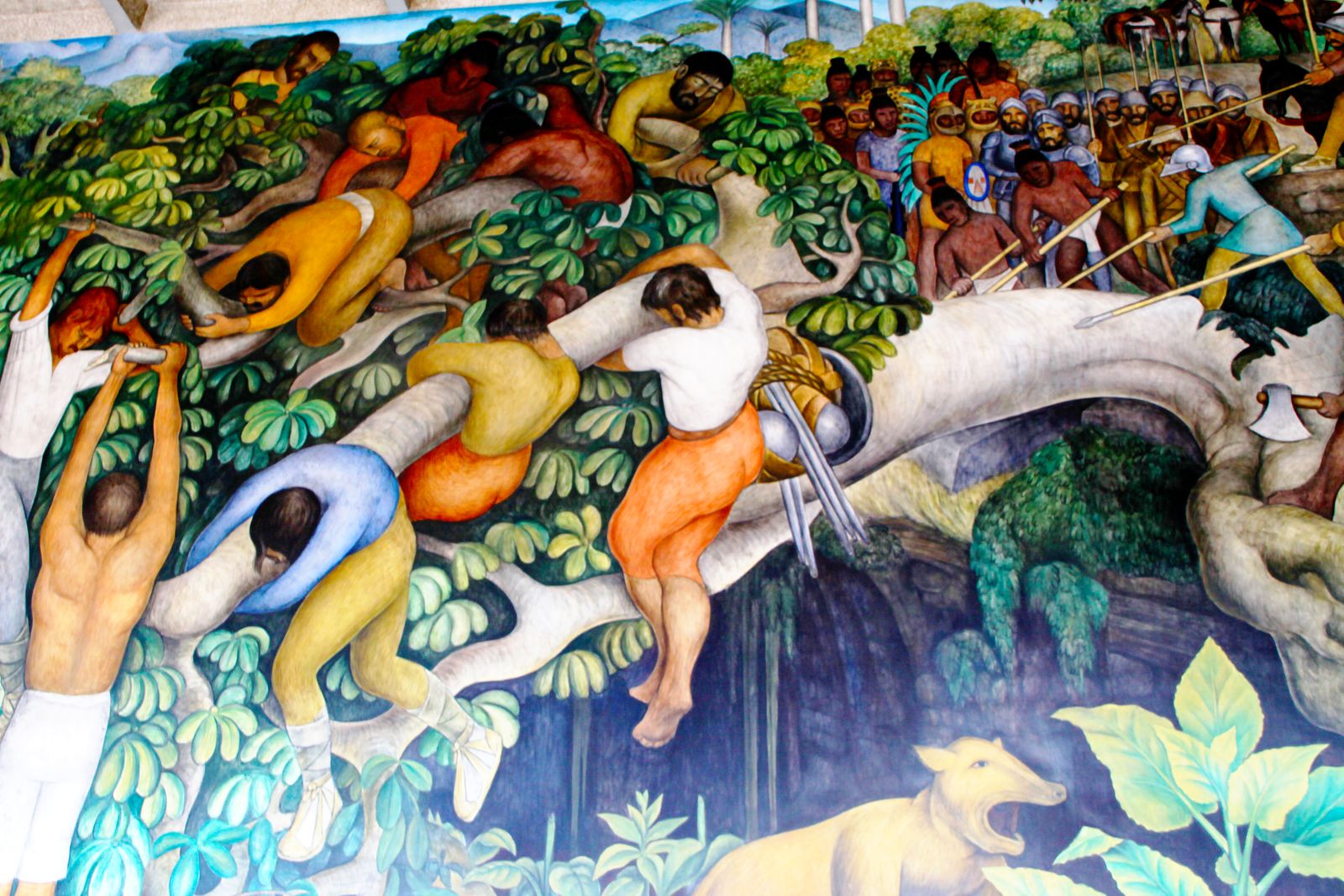
Cortés Palace, Cuernavaca. The history of the city, painted in 1929 and 1930. The American ambassador, Dwight Morrow, commissioned it.
Palacio de Bellas Artes. Man, Controller of the Universe, 1934. He first painted it at Rockefeller Center in New York, where it was destroyed in 1933 before it was finished. So he painted it again at home.
Museo Mural Diego Rivera. Dream of a Sunday Afternoon in the Alameda Park, painted in 1946 and 1947 for the Hotel del Prado. It survived the 1985 earthquake and was moved to its own museum beside the park.